UI/UX design services for healthcare products come from a handful of provider types: specialized healthtech design agencies, enterprise health consultancies, product studios with regulated-industry experience, in-house design teams, and embedded designers who join your team from outside. Each exists because healthcare products carry demands that normal consumer work never meets, and picking a provider who doesn't understand those demands is expensive in ways that have nothing to do with invoices.
If you're building a patient app, a telehealth platform, a portal, or a clinical tool, this guide maps who offers what, why healthcare design is genuinely its own discipline, the one compliance claim you should never accept at face value, and how to evaluate a partner before trusting them with something people depend on.
Who Offers UI UX Design Services for Healthcare Products
The direct map has five entries.
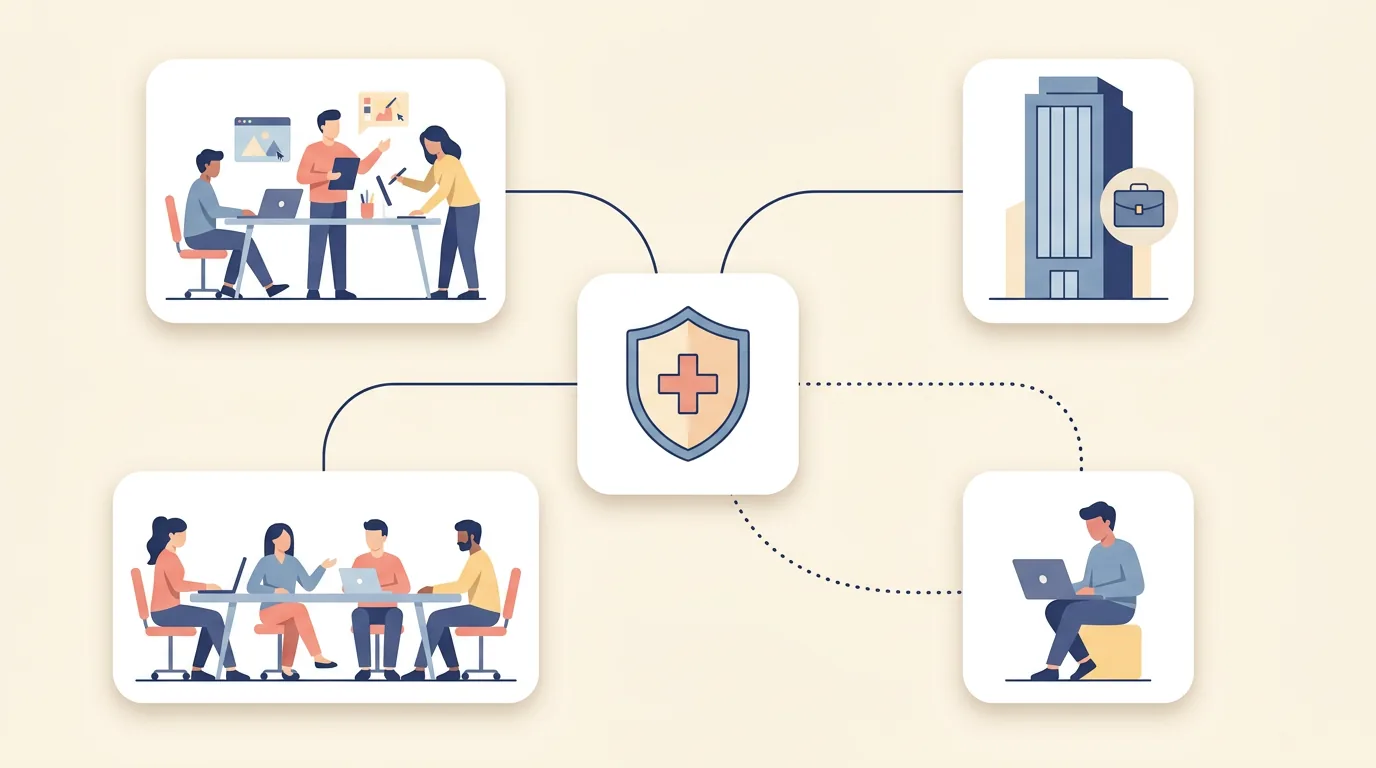
Specialized healthtech design agencies make healthcare their core market. Their portfolios read in clinical vocabulary, their teams have absorbed privacy and accessibility constraints over years, and they already know why a patient portal is not a fancy website. Enterprise health consultancies work at the scale of hospital networks and payers: multi-year systems, research-heavy programs, transformation engagements. Product studios with regulated-industry experience occupy the middle: smaller teams that have shipped patient-facing or clinical products and brought that fluency into broader product work. In-house design teams at provider organizations and healthtech companies own the product long-term and accumulate domain knowledge no outsider matches. And embedded designers, external professionals who join your team as if in-house, extend capacity without a full agency relationship.
Freelancers appear in this market too, and honestly: they fit bounded, lower-risk pieces like a marketing site or an early concept prototype. A whole patient-facing platform is a different conversation, for reasons the next section makes clear.
There's a sixth shape worth knowing, common in this industry: a design partner working alongside your compliance and clinical teams rather than around them. Increasingly the marker of someone who's done this before.
And one practical note on scope: many teams in this space arrive needing design and build together, because a patient app that's designed beautifully and engineered carelessly fails at exactly the same moments. That's why the design-and-development-under-one-roof model keeps appearing in healthcare, and why handoff quality between the two disciplines, covered later in the evaluation checks, matters even more here than elsewhere.

Why Healthcare Design Is a Discipline of Its Own
Consumer app design asks: is this delightful and easy? Healthcare design asks that plus five harder questions simultaneously.
Which audience, which moment? A healthcare product often serves patients and clinicians in the same system with completely different needs. The patient booking an appointment may be elderly, anxious, or dealing with a new diagnosis; the clinician using the same platform is time-starved, burned by bad software, and responsible for decisions that affect lives. One interface, two designs, both non-optional.
Accessibility isn't a nice-to-have here; it's the product. Health audiences span every age, every level of digital literacy, and every kind of ability, often at the worst moment of someone's life. Large type, plain language, high contrast, forgiving flows. Anything less excludes exactly the people the product exists to serve.
Privacy shapes the interface itself. Health data is the most sensitive data most people will ever hand over, and it shows in the design: clear permissions, sensible session behavior, role-based access, reassurance at anxious moments. And clinical work adds workflow gravity: tools that fit how care actually happens, because a design that adds clicks to a nurse's shift doesn't get ignored, it gets worked around, and workarounds are where safety problems start.
Add regulation layered over all of it and you get a field where generalist instincts actively mislead. That's why the specialization exists.
The Compliance Truth Nobody Should Fudge
Here's the sentence to remember while evaluating anyone in this market: design can be built for compliance, but compliance itself is implemented by engineering, legal, and organizational processes, not by design files.
A designer can and should do things that compliance requires of the interface: privacy-conscious patterns, role-based access flows, accessible contrast and focus states, audit-friendly session designs. What a designer cannot do is make a product compliant. Privacy compliance lives in how data is stored, transmitted, accessed, and governed, which is engineering and legal territory. Anyone who markets "compliance" as a design deliverable is either confused or selling past their lane, and either way it's the single most useful red flag in this whole evaluation.
The phrasing to expect from experienced providers is more careful: they'll say they design within regulatory constraints, work with your compliance and legal teams, follow accessibility standards in their work, and hand off documentation your engineers can implement correctly. That's the honest version, and it's plenty.
Matching the Provider to Your Product
Different healthcare products strain different provider types.
A patient-facing app, appointment booking, symptom tracking, medication reminders, suits a healthtech agency or a product studio with shipped patient products, because the craft is in accessibility and anxiety-aware design for a hugely varied audience. A telehealth platform adds two-sided design: patients on one screen, clinicians on the other, and both flows matter equally.
A patient portal or provider portal leans toward specialists who understand multi-role systems and integration with existing health record environments. Clinical workflow tools are the deep end: they need designers who can sit with actual clinicians, map real workflows, and defend every extra click, and they're where enterprise consultancies and the most specialized agencies justify their cost. Anything adjacent to medical devices enters regulated territory with its own documentation expectations, and that's specialist territory, full stop.
Across all of it, one matching rule holds: the higher the stakes and the more distinct the audiences, the more healthcare specialization stops being a preference and becomes the requirement.

How to Evaluate a Healthcare Design Partner
Four checks, in order of what they reveal.
Portfolio depth first. Look for shipped patient portals, telehealth, or clinical workflow work, and read whether the case studies talk about real constraints or just aesthetics. Multi-audience proof second: examples where patients and clinicians were both designed for, because that's the hard part of the job. Accessibility practice third: ask what standards they follow in their design work and how they verify it; a confident, specific answer is table stakes in this market. And process questions fourth: how do they handle working alongside compliance and clinical stakeholders? The best answer describes collaboration. The worst answer treats regulation as someone else's department.
Red flags, quickly: "compliant design" sold as a deliverable, no accessibility mentions anywhere, a portfolio where every user looks like a healthy twenty-something consumer, and impatience with your legal team. Any one of those ends the conversation.
We'll be as careful about our own card as we've asked you to be about others'. Quadiz is a design and development studio that builds patient-facing products, apps, portals, and platforms, with design and development under one roof, and we design with privacy-conscious patterns and accessibility standards built into our work. What we don't claim is the compliance engineer's hat; that belongs to your legal and engineering teams, and any honest partner will draw the same line. If that's the kind of clarity you want in a design partner, our case studies are the evidence, and you can book a free call to talk through your product.
Tags:#Healthcare UX#Medical App Design#Patient Portals
Written byFounder & Lead Developer
Nayef
Visit Website ↗Tech enthusiast, lead developer, and founder of Quadiz.